



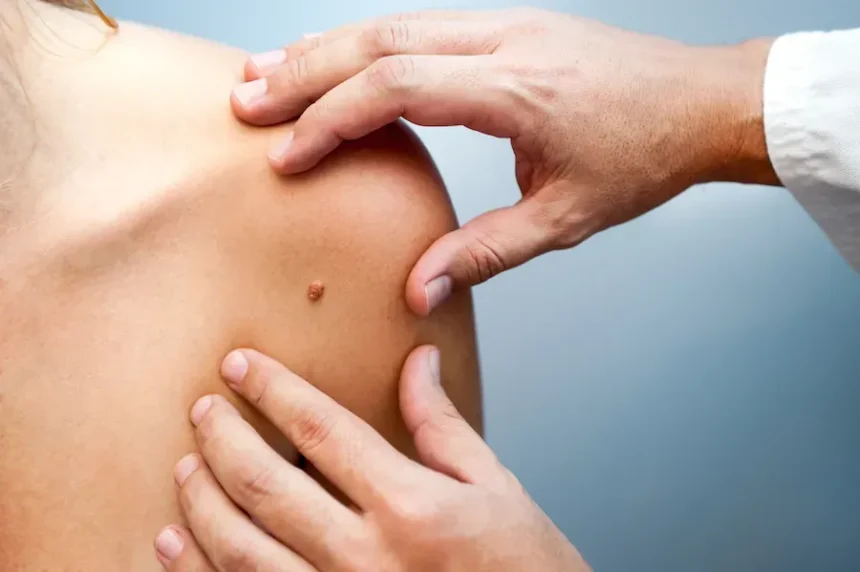
Many adults have common moles on their bodies. While usually benign, moles can undergo changes that warrant professional attention. Understanding the difference between a typical mole and one that requires evaluation helps individuals maintain their skin health. Regular self-examinations allow you to spot irregularities early and provide the best opportunity for effective dermatology-based intervention if a problem exists.
What Are Moles?
Moles develop when skin cells grow in a cluster instead of spreading throughout the skin. These cells, melanocytes, make the pigment that gives skin its natural color. Moles may darken after exposure to the sun, during the teen years, and during pregnancy.
A common mole is round or oval, has a smooth surface with a distinct edge, and is often dome-shaped. It typically has an even color of pink, tan, or brown. It is normal to have between 10 and 40 moles by adulthood. Moles usually change slowly as years pass, and can become raised and lighter in color. Some may not change at all, while others may slowly disappear over time.
When Should You Seek Care?
Recognizing changes in your skin remains the primary method for identifying potential issues. While most moles look similar to one another, a mole that looks different from the rest or acts differently serves as a warning sign. Dermatologists often refer to this as the “ugly duckling” sign, and the ABCDE guide offers a useful framework for evaluating moles:
- Asymmetry: One half of the spot does not match the other half.
Border: The edges are irregular, ragged, notched, or blurred.
Color: The color is not the same all over and may include shades of brown or black.
Diameter: The spot is larger than 6 millimeters across, although melanomas can sometimes be smaller than this.
Evolving: The mole is changing in size, shape, or color.
Sensory symptoms also indicate a need for a professional exam. If a mole starts to itch, bleed, or become tender to the touch, scheduling an appointment is the appropriate next step. A mole that looks like a new sore or a sore that does not heal within a few weeks also requires evaluation.
How Does Dermatology Treat Them?
If a dermatology specialist determines a mole needs removal, they will perform the procedure during an office visit. The method chosen depends on the mole’s appearance and the depth of the suspicion regarding its nature. For a surgical excision, the dermatologist cuts out the entire mole and stitches the skin closed. This method is often used if there is concern about skin cancer, as it allows for the removal of the entire lesion as well as a margin of healthy skin. The tissue is then sent to a lab for examination. If a mole is removed for cosmetic reasons or because it is irritated by clothing, the procedure is similar. The goal is always to remove the cells safely while minimizing scarring.
Seek Professional Dermatology Services
While self-exams provide a first line of defense, a trained eye can detect subtle changes that might otherwise go unnoticed. Dermatologists use specialized tools to look deep into the pigment of the skin without making an incision. Annual skin exams offer a proactive approach to skin health and establish a baseline for your specific mole patterns. If you notice any of the changes described above, or simply have a spot that feels wrong, booking a consultation provides clarity.