


Digital dentistry adoption has accelerated across practices and labs, but understanding has not always kept pace.
- Misconception #1: A Digital Scanner Automatically Improves Accuracy
- Misconception #2: Digital Scanning Is Just a Faster Impression
- Misconception #3: CAD/CAM Software Works Independently of the Scanner
- Misconception #4: Milling and Fabrication Fix Design Problems
- Misconception #5: Digital Dentistry Is Only About Individual Tools
- Where These Misconceptions Show Up in Real Practice
- Bringing Clarity to Digital Dentistry Adoption
Industry data shows that 53% of U.S. dentists now use intraoral scanners, yet full digital integration remains uneven. That disconnect fuels confusion about what digital tools actually deliver in daily workflows.
Many misconceptions form early, shaped by marketing language or partial implementation. A dental scanner or design system may perform as intended but still fall short when expectations do not align with real-world clinical use. Technology does not replace process discipline or technique.
Clarifying these misconceptions supports better decisions during adoption. Understanding where digital tools add value and where they depend on integration creates a clearer path to predictable outcomes.
Here’s what this article examines.
- Common assumptions that shape how digital tools are evaluated
- How scanners, design environments, and fabrication systems interact
- Why workflow alignment matters more than individual features
Misconception #1: A Digital Scanner Automatically Improves Accuracy
Digital tools are often assumed to deliver accuracy by default. In reality, a dental scanner sets the potential for accuracy, but it does not guarantee it. Technique, consistency, and data handling still shape the results.
Why Capture Technique Still Matters
Intraoral scanners reduce many of the physical variables tied to traditional impressions. Scan path and coverage discipline still influence data quality. Gaps or distortions from inconsistent technique must be corrected later, which increases time and variability.
When scan quality varies, downstream tools spend time fixing issues instead of refining the case. Accuracy gains come from repeatable capture standards, not automation alone.
Accuracy Depends on How Data Is Interpreted
Clinical research shows digital impressions can be highly accurate when protocols are followed. An in vivo study in BMC Oral Health reported that two intraoral scanners produced comparable trueness and precision across the whole maxillary arch, with the difference in precision around 10 μm, which the authors considered clinically significant.
That finding reinforces an important point. Accuracy is not locked in at capture unless scan data transitions cleanly into design environments. Proper interpretation by design tools is central to preserving accuracy throughout the workflow.
Misconception #2: Digital Scanning Is Just a Faster Impression
Digital scanning is often viewed as a time-saving alternative to traditional impressions. That view overlooks how digital capture changes clinical decision-making at the start of the workflow.
Digital Capture Changes When Problems Are Identified
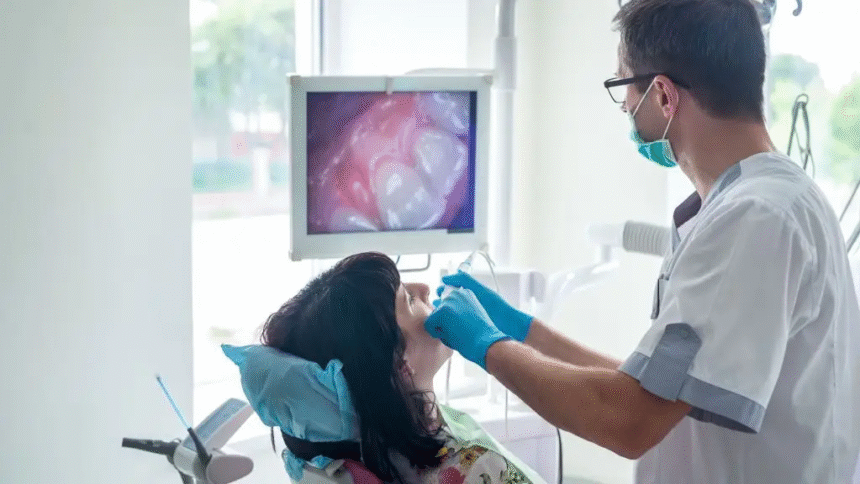
Unlike conventional impressions, digital scanning provides immediate visual feedback. Clinicians can identify missing data, margin issues, or tissue interference during capture rather than after submission.
That earlier visibility allows corrections to happen before design begins. Problems are addressed at the source rather than discovered downstream.
Speed Is Secondary to Workflow Control
While digital scanning can reduce chair time, speed is not the primary benefit. The larger advantage is control over data quality before it moves forward.
By shifting error detection earlier, digital workflows reduce rework during design and fabrication. The result is fewer corrections later, not just a faster impression process.
Misconception #3: CAD/CAM Software Works Independently of the Scanner
Design software is often viewed as a standalone step in the digital workflow. In practice, design outcomes are shaped by how scan data is interpreted, not just by the software’s features.
How Design Software Interprets Scan Data
Design environments rely on assumptions about scan resolution, margin clarity, and surface continuity. When scan data aligns with those assumptions, modeling proceeds smoothly. When it does not, design tools compensate by smoothing, filling, or approximating missing information.
Those adjustments are rarely obvious at first. They tend to surface later as fit issues or additional corrections during fabrication or delivery.
Why Alignment Between Capture and Design Matters
Alignment between capture systems and CAD/CAM dental software reduces reinterpretation at the design stage. When both systems process data using compatible logic, fewer corrections are required before fabrication begins.
The difference becomes clearer when workflows are compared side by side.
| Workflow Stage | Misaligned Systems | Aligned Systems |
| Scan to design | Manual fixes | Direct transfer |
| Design effort | Higher | Lower |
| Adjustments | Frequent | Limited |
When capture and design operate within a coordinated workflow, accuracy is carried forward rather than rebuilt at each step.
Misconception #4: Milling and Fabrication Fix Design Problems
Fabrication is sometimes treated as a corrective step, as if milling or printing will resolve issues created earlier. In practice, fabrication systems execute design decisions. They do not improve the quality of the input.
Fabrication Systems Follow the Design
CAM workflows translate a design into toolpaths, print files, or milling instructions. If the design contains approximation, weak margins, or incorrect contact relationships, fabrication will reproduce those choices with high consistency.
That consistency is a strength, but it cuts both ways. Precision at fabrication makes early errors more visible, not less.
Why Errors Compound Downstream
Small issues introduced during capture or design rarely stay small. They tend to surface later as fit friction, occlusal adjustments, or remakes that consume time at the end of the workflow.
Digital systems reduce many sources of variability, but they also reduce opportunities to hide a mismatch. The best way to prevent fabrication problems is to correct the source, not expect downstream steps to repair it.
Misconception #5: Digital Dentistry Is Only About Individual Tools
Digital dentistry is often evaluated tool by tool. Scanners, design software, and fabrication systems are compared independently, as if each operates in isolation. That approach misses how digital outcomes are shaped by how those tools work together.
Isolated Tools Create Fragmented Workflows
When digital tools are adopted independently, workflows tend to fracture at handoff points. Data moves between systems with different assumptions, forcing reinterpretation or manual correction. Each workaround introduces small inconsistencies that accumulate as the case progresses.
Fragmentation rarely shows up immediately. It appears later as increased adjustments, longer turnaround times, or inconsistent results across similar cases.
Integration Determines Consistency Over Time
Integrated workflows reduce those friction points by aligning how data is captured, interpreted, and fabricated. When systems share compatible logic, accuracy carries over rather than being rebuilt at each stage.
Over time, that alignment matters more than any single feature. Consistent interpretation across the workflow supports predictability, repeatability, and fewer downstream corrections.
Where These Misconceptions Show Up in Real Practice
Misconceptions about digital dentistry often arise in routine cases. Small gaps in capture, design interpretation, or fabrication assumptions create friction that leads to added adjustments or delays. These issues are often attributed to individual tools rather than to workflow misalignment.
Over time, those inefficiencies compound. Practices may experience greater variation in digital case volume than expected, even when similar systems are in use. Recognizing how misconceptions affect daily processes helps explain why outcomes differ and why integration matters as much as the technology itself.
Bringing Clarity to Digital Dentistry Adoption
Digital dentistry continues to evolve, but confusion persists when tools are evaluated in isolation. Many common misconceptions stem from expecting technology to compensate for gaps in process or technique.
Ultimately, clear outcomes depend less on individual features and more on how systems function together in daily use.
When capture, design, and fabrication interpret data consistently, digital workflows become more predictable. Fewer adjustments, reduced rework, and steadier results follow when assumptions are shared across the process. Integration turns digital tools into a coherent clinical workflow.
Approaching digital adoption with realistic expectations helps practices make better decisions. Understanding what technology can and cannot do keeps the focus on coordination and discipline. That perspective supports digital dentistry as a sustainable clinical advantage.