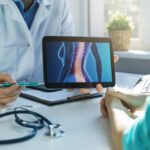



Medical imaging encompasses various technologies that healthcare providers use to view the human body; they use imaging to diagnose, monitor, and treat medical conditions. These tests reveal internal structures hidden by skin and bone. Magnetic Resonance Imaging, or MRI, is a tool that uses magnetic fields to create detailed images of organs and tissues. Researchers rely on this technology to understand diseases better and develop new treatments.
Understanding Radiation-based Scans
Radiographic techniques are one type of imaging in modern medicine, and they differ significantly from MRI and ultrasound. X-rays produce images of internal tissues and bones, and organs on film. While standard X-rays employ electromagnetic waves, they do not penetrate all materials equally.
Computed tomography, or CT, scans combine a series of X-ray images taken from different angles. A computer processes these scans, and it creates cross-sectional slices of the bones and soft tissues. Because these images provide such high detail, doctors prefer them for diagnosing complex internal injuries.
Dual-energy X-ray absorptiometry, or DEXA, scans measure bone mineral density to assess the strength and health of bones. Mammography uses a low-dose X-ray system, and it examines breast tissue for cancerous abnormalities. Early detection is helpful because treatment can begin before the disease progresses significantly.
Fluoroscopy uses a continuous X-ray beam, and it displays the movement of a body part on a monitor. While the beam passes through the body, the image is transmitted to a screen for immediate viewing. Doctors use this technology to help diagnose conditions and guide medical procedures.
Exploring Non-radiographic Methods
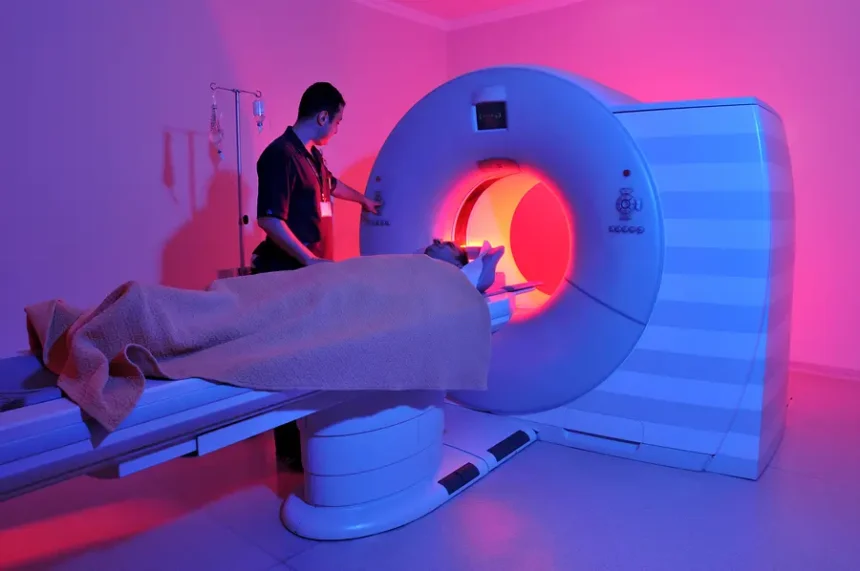
Unlike X-rays, non-radiographic imaging methods do not involve radiation while capturing images. MRI employs powerful magnets and radio waves to generate detailed pictures of organs. The patient lies inside a large tube-shaped scanner, but the machine does not use any radiation. Since it provides excellent contrast between soft tissues, it is effective for brain and spinal cord examinations.
Ultrasound imaging involves exposing part of the body to high-frequency sound waves. These exams do not use ionizing radiation, so they are safe for monitoring fetal development. Because they capture real-time images, they can show the structure and movement of the body’s internal organs.
Conducting Medical Research
Doctors use MRI technology to observe brain activity non-invasively. Functional MRI, or fMRI, helps doctors map which areas of the brain are active during certain activities. This mapping helps surgeons understand which part of the brain to operate on, and researchers believe fMRI may be useful for biofeedback therapy.
Scientists also utilize MRI technology to track the effectiveness of new treatments. A scan might reveal tumor shrinkage, or it could show stopped growth after a specific therapy. Research applications may include:
- Mapping brain connectivity
- Assessing cardiac health
- Evaluating cancer treatments
Because the images are so clear, clinical trials may rely heavily on this data.
Find MRI and Other Imaging
Medical imaging assists doctors in accurate diagnosis and effective treatment planning. Many different imaging technologies exist, and each offers unique benefits depending on the medical situation. If you want to learn more about medical imaging and research, consult a medical imaging specialist near you.